Industry Overview and Market Opportunities
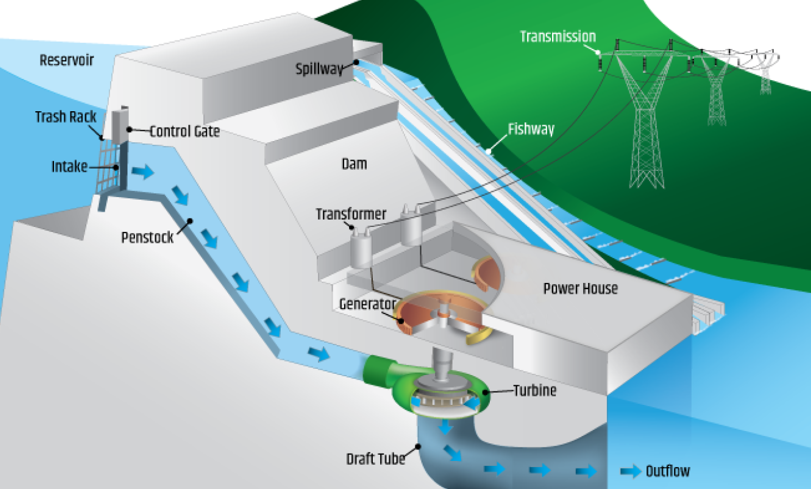
The hydropower industry is a mature but evolving industry with steady growth primarily through upgrades, prospects for increased generation and storage capacity driven by renewable integration, and growth in key western states (Washington, Oregon, and California). Hydropower accounts for nearly 6% of all utility-scale electricity generation as of 2025, with total capacity just over 80 GW across 2,200 plants. Recent growth has primarily come from upgrades to existing plants and adding hydropower capacity at non-powered dams. The pumped storage hydropower (PSH) sector, crucial for energy storage, added 1.4 GW of capacity during the past decade, primarily through facility upgrades. Drought conditions in the Western states, which hold about half of the nation’s hydropower capacity, have impacted growth.
The U.S. small hydropower sector is also growing, with market size expected to reach $366.5 million by 2030, expanding at a CAGR of 2.6% from 2025 to 2030. The overall U.S. hydropower market, including large and small projects, is influenced by ongoing modernization efforts, environmental regulations, and investments in efficiency and flexibility improvements.
Despite some challenges such as high capital costs and environmental regulations for new large facilities, government incentives like tax credits promote the development of pumped-storage projects and smaller-scale hydropower initiatives. The industry also benefits from technological advances and modernization efforts that enhance reliability and integration with other renewable sources.
Small Scale Hydropower Sector
In the United States, the small scale hydropower sector is generally defined as hydroelectric projects with a maximum capacity of up to 20 megawatts (MW). The Federal Energy Regulatory Commission’s (FERC) classifies small hydropower plants under 20 MW in size. Small hydropower projects in the U.S. often use existing dams, canals, or water conduits and can include retrofitting non-powered dams and in-conduit hydropower.
Small hydropower is typically categorized into different types such as non-powered dams, conduit hydropower, new stream reach projects, and pumped storage (though pumped storage facilities are usually larger). The sector represents a significant portion of the hydropower development pipeline, with many projects under 20 MW capacity aimed at providing renewable electricity with lower environmental impact and quicker permitting processes.
This sector plays an important role in the U.S. renewable energy mix by contributing decentralized, small-scale electricity generation, particularly in rural or isolated areas. Federal policies in recent years have aimed to simplify the licensing process for small hydropower projects, encouraging growth and investment in this area.
Click here to download the full Hydropower Report
Trade Associations
- National Hydropower Association (NHA) – www.hydro.org
The leading national trade association dedicated to promoting growth of clean US water power including conventional hydropower, pumped storage, and marine energy. Represents over 300 organizations across the hydropower industry.
There are not any state specific trade organizations across PA, OH, WV, NY, or MD that focus solely on hydropower generation, but several that represent and advocate for renewable energy including hydropower:
- Energy Association of Pennsylvania (EAP) – www.energypa.org
The primary trade association representing and advocating for Pennsylvania’s electric and natural gas utilities, including those involved in hydropower generation. - American Municipal Power – www.amppartners.org
American Municipal Power, Inc. (AMP) is a nonprofit wholesale power and services provider for more than 130 public power communities that serve about 661,000 customers across nine states. They represent generation from multiple sources including hydropower.
Connect. Collaborate. Power the Future.
Be part of the conversations that matter.
Return to the Energy Supply Chains page to access additional reports and information.
Return to the main Energy page for upcoming events bringing together manufacturers, suppliers, and energy leaders.
Contact us to learn more.